

September Jobs Report: Job Growth Slows Again, But the Labor Force Stays Elevated
The September Employment Report missed the mark, with only 29K jobs added and downward revisions to the prior two months. Employers were likely responding to the tighter fiscal environment, as high treasury yields and a Fed rate hike make borrowing more expensive, thus dampening plans for hiring and expansion in the near term. But workers seem to still see a chance for more opportunities as marginally attached and discouraged worker populations moved back into the official labor force, and the participation rate increased for the second month in a row.

The State of the Hispanic Workforce
If not for the steady rise in Hispanic workers, the U.S. labor market would face a much steeper uphill climb. Between 2015 and 2025, Hispanic workers accounted for roughly 61% of labor force growth. Over the next decade, this demographic is expected to account for all labor force growth. Understanding the movements of the Hispanic workforce can show us where the labor market is headed in the future.

August Job Openings Show Lackluster Movement
Despite the strong job gains in August, the Job Openings and Labor Turnover Survey (JOLTS) report shows a labor market that is still stuck in low gear. Employers picked up hiring slightly, but falling job openings and flat quits show there’s still very little movement beneath the surface.

The AI Boom Is Driving a 118% Surge in Data Center Jobs, But Median Pay Is Dropping
Building the physical computing power for AI hasn't slowed down. But a few years into this hiring spree, a clearer picture is coming into view: companies keep putting out job ads at a rapid pace, but median pay is dropping.

Treasury Yields Near 20 Year High: Why That Matters for Labor
Treasury yields neared their highest level in two decades this week. Borrowing is getting more expensive from two directions at once—a rising Treasury yield, and an expected increase in the Fed Funds Rate. Both land on employers the same way: tighter credit, more caution, slower hiring.

August Jobs Report: Jobs Bounce Back
The August Employment Report bounced back in August, with 162K jobs added. June and July were revised up to paint a bit of a rosier picture for the summer. The August jobs numbers show a labor market catching its breath rather than losing steam. 162,000 new jobs, broader industry participation, and workers feeling confident enough to voluntarily leave positions all point to underlying resilience.

July Job Openings Tick Up, But Turnover Remains Low
The July Job Openings and Labor Turnover Survey (JOLTS) showed openings are up from June’s revised numbers, now at 7.3M, but hires are back down as job growth slowed, with the hires rate at 3.2. Layoffs ticked down to 1.0, quits dropped to 1.9, and other separations (retirements) were stable, all signs that market stagnation is once again taking hold as macroeconomic uncertainty rises.

Back to School 2026: Early Childhood Teachers in High-Cost Metros Earn Just $2-$4 Above Minimum Wage
Heading into the 2026-2027 academic year, ZipRecruiter analyzed active U.S. teaching job listings nationwide, combining compensation and posting data with localized minimum wage policies. Examining pay scales alongside local wage floors highlights where teacher compensation keeps pace with living costs and where early education staffing shortages are most acute.

ZipRecruiter Job Seeker Confidence Survey 2026 Q3
The ZipRecruiter Job Seeker Confidence Index eased 6.3 points in the third quarter of 2026, to 93.5. That’s a step back from Q1’s stronger reading, as hiring activity slowed and inflation ticked back up over recent months. Conflicting economic signals and movements from employers are leaving many job seekers more anxious about their prospects than in our last read. But job seekers aren’t standing still and accepting defeat: many are upskilling, sharpening their search strategies, and turning to AI tools to stay competitive in a market that keeps changing shape.

July Jobs Report: Supply and Demand Fall Back, Leading to Fewer Workers and Fewer Jobs
The July Employment Report solidified that the labor market is not out of the woods quite yet. With a loss of 23K jobs in July, and downward revisions to both of the prior two months, the upward momentum of job growth from the spring has slowed markedly.

June Job Openings Slide, But Hiring Finally Catching Up
The June Job Openings and Labor Turnover Survey (JOLTS) showed openings continued to slide down in June, to 7.4M, but still remained 2.2% above last year's levels. The hires rate ticked up to 3.4%, the quits rate held flat at 2.0%, and layoffs stayed at 1.1%. May was revised to a slightly more balanced position too, with a small bump to both hires and quits and a downward revision to openings.

More Jobs, Higher Bar: The 2026 AI Employer Report
AI's introduction to the labor market got off to a rocky start, with speculation that it would be a massive job killer. The data tells a different story. Instead of cutting headcount to save money, companies are using AI to reshape their teams, speed up hiring processes, and raise the bar on what they expect from employees. AI adoption is ramping up, and so far, it looks like a net positive for job creation.

June CPI: Core Inflation Cools, But Headline Volatility Threatens Labor Momentum
Inflation cooled significantly in June to 3.5% year-over-year growth. Following a three-year high in May, we just saw the largest one-month CPI decrease in over six years, at -0.4%. This cooling was primarily driven by a sharp drop in energy prices, which served as the largest contributor to the overall decline.

Unclogging the Pipeline: Why Aren’t More Workers Flocking to Lucrative Trade Jobs?
By nearly every measure, trade jobs offer stability, good compensation, and satisfaction in the American economy. And yet, the workforce pipeline feeding them is fragmented, informal, and increasingly strained.

June Jobs Report: A Labor Market Holding Its Breath
The June Employment Report came in weaker than expected, with only 57,000 jobs added to the economy. Inflation has ticked back up and is slowing down the momentum that had been building over the past few months.

May Job Openings Hold Steady, But Hiring Is Still Catching Up
The May Job Openings and Labor Turnover Survey (JOLTS) shows that employers are feeling optimistic about the future, with job openings staying steady at 7.6 million. But that optimism has yet to translate to action, with hires still at 3.3%, flat with last month given revisions.

Only 28% of U.S. Job Postings Pay Enough to Raise One Child on a Single Income
Every working parent knows "the math.” You take a salary, subtract housing, subtract childcare, and pray there is enough left over to actually live on.
But over the last few years, the math has fundamentally broken. As the cost of the most basic necessities—housing and childcare—skyrockets, wages simply haven't kept pace. The result is that raising a family in the U.S. has become prohibitively expensive. And for women, who overwhelmingly bear the brunt of the financial and career compromises, the challenge is even steeper.

Summer Job Postings Surge 82%, Yet Many Young Workers Struggle to Get Hired
Looking for a summer job this year? The timing of a summer job search matters more than you might think. ZipRecruiter’s latest data shows that the best time to apply depends heavily on local weather and school calendars rather than a single national timeline.

May Jobs Report: Job Gains are Back, But Wages Aren’t Keeping Up
The May Employment Report confirms that the labor market is gaining traction. The economy added 172,000 jobs in May, unemployment held steady, and underemployment ticked down as more workers found the roles and hours they were looking for. Labor force participation remains low but stable. Taken together, the data suggest that energy is returning to a labor market that had been largely stagnant just in time for summer.
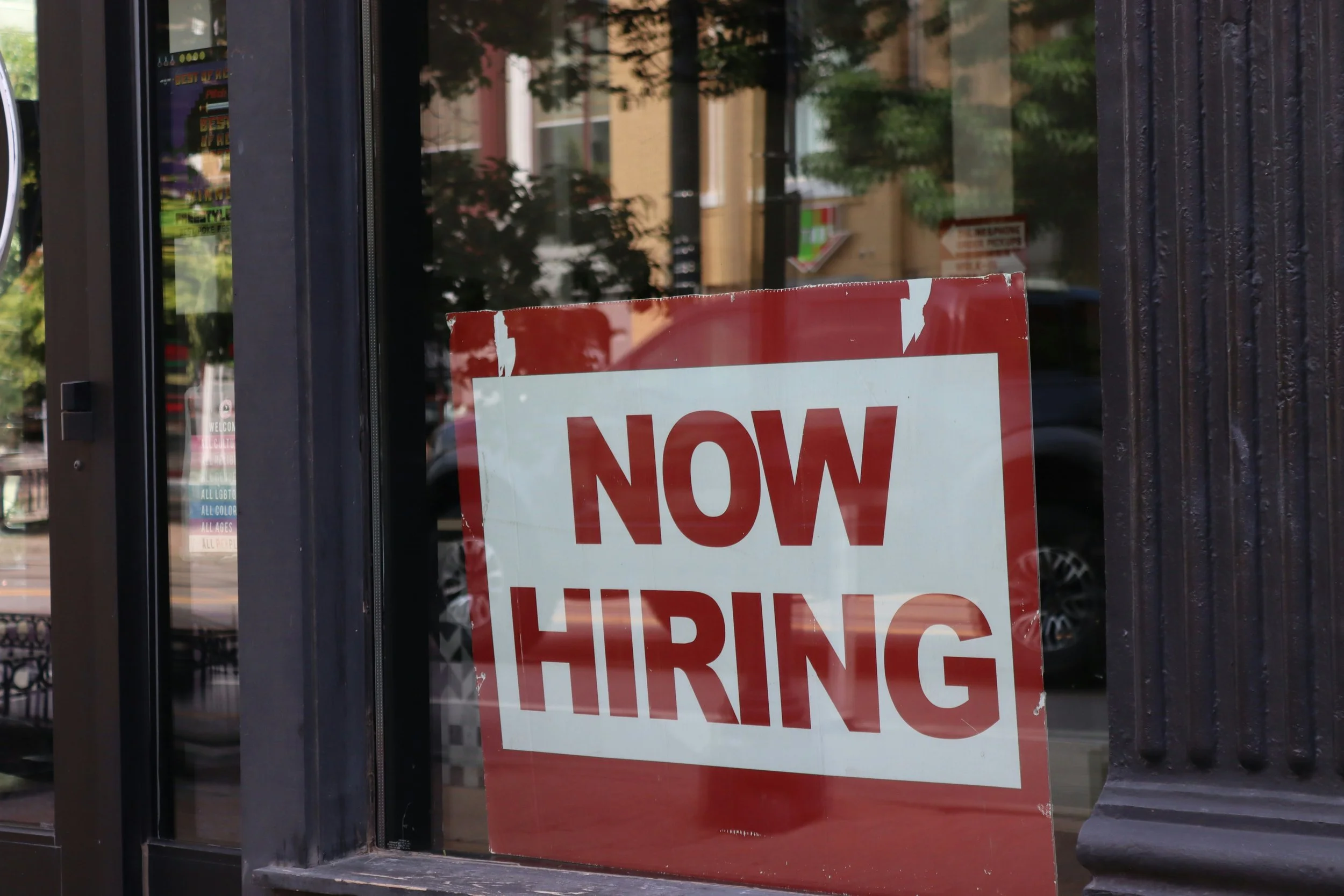
April Job Openings Surge to Near Two-Year High, But Hiring Pulls Back
Job openings surged to 7.6 million in April, the highest level in nearly two years, but hiring pulled back to a 3.2% rate. The gap between employer demand and actual hiring points to a widening skills mismatch — and structural forces like an aging workforce and reduced immigration mean it won't close quickly.